
Tiny House Systems & Utilities
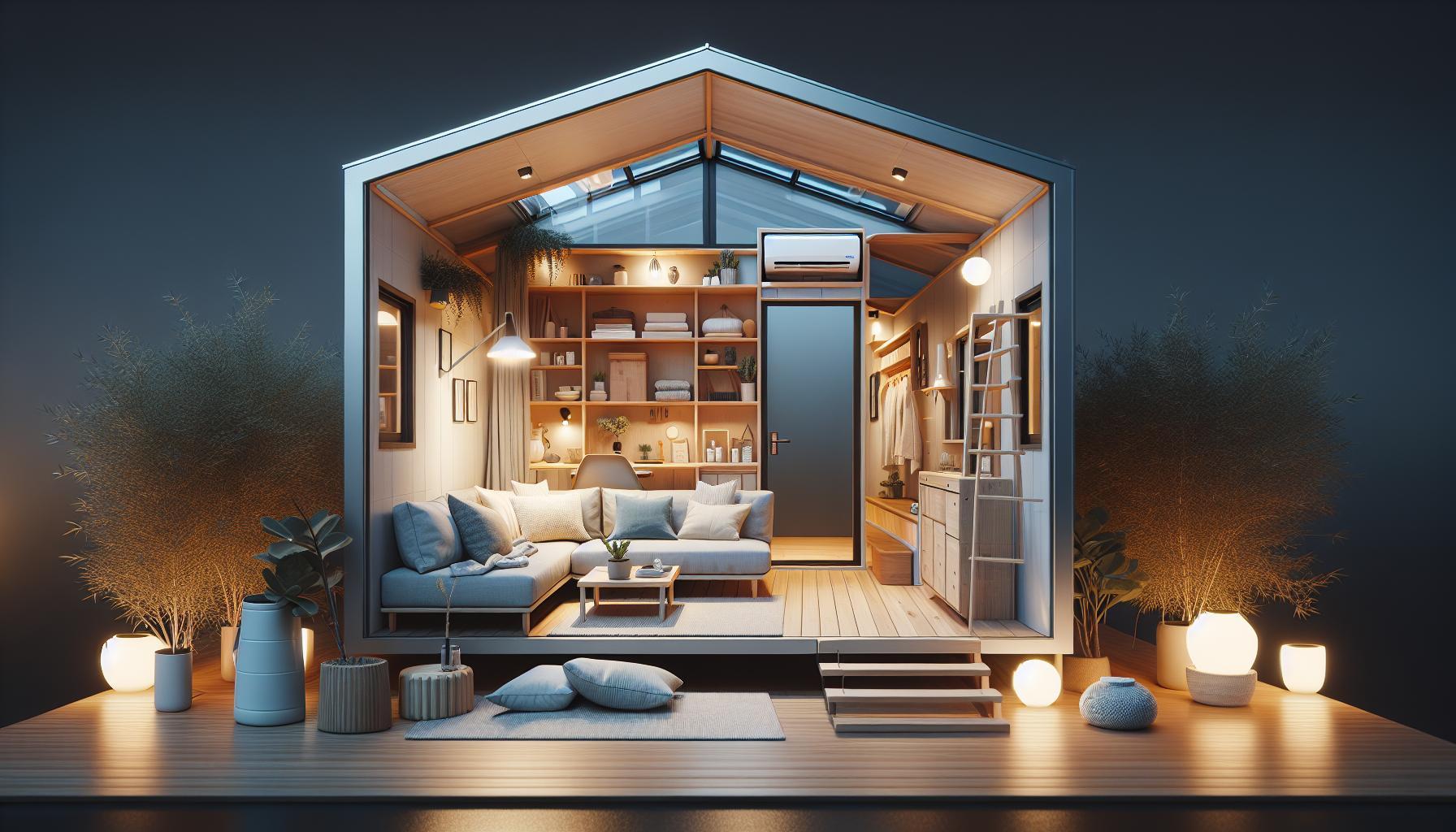
Tiny house systems and utilities is the mechanical, electrical, and plumbing (MEP) engineering that delivers energy autonomy, climate regulation, freshwater supply, and waste sanitation within compact residential dwellings.





Foundational Guides & Priority Resources
Can a Mini Split Heat a Whole House? Winter Comfort Solutions
Technical deep dive into mini-split heat pump performance in tiny homes, explaining inverter heat curves and single-zone efficiency.
Can One Mini Split Cool a Whole House? Capacity Truth Revealed
Debunks common HVAC oversizing myths in micro-living, providing accurate BTU calculations to prevent short-cycling and humidity buildup.
Are Tiny Houses Self Contained? Essential Systems for Off-Grid Freedom
Master engineering guide to fully self-contained tiny home setups: solar arrays, lithium battery banks, fresh tanks, and waste separation.
Ductless Mini-Split Mechanics, Solar Sizing & Sanitation Engineering
Engineering mechanical systems for a tiny house requires precision load calculations. Because the total interior volume is small (often 2,000 to 3,500 cubic feet), installing oversized heating or cooling equipment causes rapid short-cycling—where a high-capacity air conditioner cools the air in minutes without running long enough to pull latent moisture from the air, leaving the micro-home cold and damp. High-efficiency variable-capacity inverter mini-splits (typically 9,000 to 12,000 BTU with 20+ SEER ratings) deliver modulated heating and cooling that maintains steady comfort and low power draw.
Off-grid electrical architecture relies on paired solar photovoltaics (PV) and Lithium Iron Phosphate (LiFePO4) battery storage. A typical off-grid tiny home requires a 2.5 kW to 4.5 kW rooftop solar array matched to a 48V, 10 kWh to 15 kWh battery bank and a 3,000W to 5,000W pure sine wave inverter/charger. This configuration reliably runs the refrigerator, LED lighting, water pump, laptops, and mini-split, with an auxiliary propane or generator backup for prolonged cloudy winter conditions.
Sanitation and water management form the third critical utility branch. Dwellers generally choose between three waste sanitation typologies: water-free urine-diverting composting toilets (such as Nature's Head or Separett), high-heat electric/propane incinerating toilets (such as Cinderella), or conventional blackwater holding tanks paired with RV macerator pumps. Greywater from sinks and showers is filtered through multi-stage sediment filters and grease traps before safe disbursement into sub-surface mulch basins or legal leach fields.
| Utility Subsystem | Primary Engineering Component | Operational Metric & Standard Capacity |
|---|---|---|
| Climate Control (HVAC) | Inverter Ductless Mini-Split Heat Pump | 9,000 – 12,000 BTU (20 – 25+ SEER rating; sub-zero heating down to -15°F) |
| Off-Grid Electrical | LiFePO4 Battery Bank + Solar Array | 48V 10-15 kWh battery storage; 3,000W pure sine wave inverter; 3kW PV array |
| Freshwater Delivery | Food-Grade PEX-A + 12V Diaphragm Pump | 3.0 – 4.5 GPM delivery pressure at 45-55 PSI; 40 to 100 gallon fresh holding tank |
| Water Heating | On-Demand Tankless Propane / Electric | 2.5 – 3.5 GPM continuous hot water flow with instantaneous ignition |
Thematic Exploration Directory
Mini-Split Heating, Cooling & Sizing
Frequently Asked Questions
What size mini-split do I need for a tiny house?
Most tiny houses between 200 and 350 square feet perform best with a 9,000 or 12,000 BTU mini-split heat pump with variable inverter speed, ensuring smooth continuous dehumidification and efficient low-ambient winter heating.
Can you run a tiny house completely off-grid with solar power?
Yes. A 3kW to 4.5kW solar array paired with a 10kWh to 15kWh LiFePO4 battery bank can power all standard residential electronics, refrigeration, and lighting, especially when paired with propane for on-demand water heating and cooking.
How does a composting toilet work in a tiny house?
A composting toilet uses a urine-diverting mechanism to keep liquids and solids strictly separate, preventing the anaerobic bacteria that cause sewage odors. A small continuous 12V exhaust fan vents residual moisture outside.
What is the best way to heat water in a tiny house?
Tankless on-demand propane water heaters (such as Rinnai or Fogatti) are the industry standard, providing endless hot water without drawing heavy electrical power or taking up precious storage space with bulky tanks.